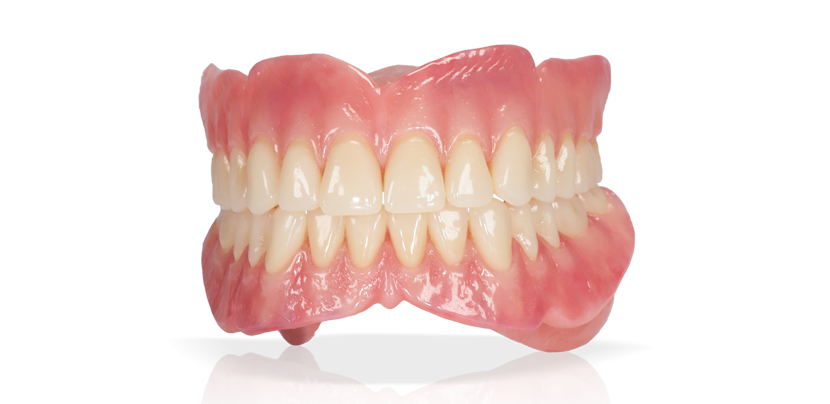
On this occasion, I will talk about the importance of occlusion in complete dentures. To begin, dental occlusion is a fundamental concept in prosthetic dentistry. It refers to the static and dynamic relationship between the upper and lower teeth when they come into contact during mastication. Proper occlusion is crucial to ensure the health and correct functioning of the stomatognathic system, which includes the temporomandibular joint (TMJ), masticatory muscles, and supporting structures.
Occlusion becomes even more important in complete dental prostheses, where the absence of natural teeth requires the reestablishment of a biodynamic, balanced, and harmonious occlusion. Incorrect occlusion in complete dentures can lead to various patient issues such as TMJ pain, bruxism, excessive wear of artificial teeth, difficulty chewing and swallowing, and—most critically—an improper distribution of occlusal forces on supporting tissues.
Importance of Occlusion in Complete Dentures
The TMJ is one of the most complex joints in the human body, and its proper function largely depends on balanced occlusion. Inadequate occlusion in complete dentures can generate excessive and uneven forces on the TMJ, potentially causing pain, inflammation, and in severe cases, temporomandibular disorders (TMD).
Additionally, poor occlusion negatively affects masticatory function and the ability to efficiently process food. This can lead to digestive and nutritional issues, especially in elderly patients who rely heavily on complete dentures for proper nutrition.
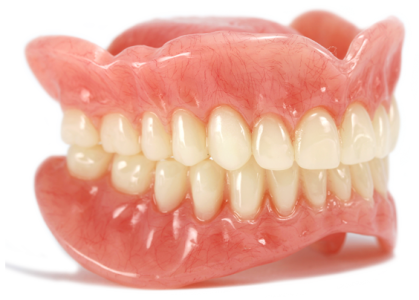
Types of Occlusion in Complete Dentures
There are different types of occlusion used in complete dentures, each with its own characteristics and benefits:
Bilateral balanced occlusion:
In this type, upper and lower artificial teeth establish simultaneous and uniform contact in centric position as well as during lateral and protrusive movements. It is considered the most favorable for complete dentures because it evenly distributes occlusal forces across supporting tissues.
Mutually protected occlusion:
Here, posterior teeth (molars and premolars) maintain contact in centric position, while anterior teeth (incisors and canines) protect posterior teeth during eccentric movements. This type is commonly used in removable partial dentures and complete dentures with remaining natural teeth.
Monoplane occlusion:
In this occlusion, all artificial teeth are arranged on a single plane, without compensating curves such as the Curve of Spee. It is mainly used in cases of severely resorbed alveolar ridges, where balanced or mutually protected occlusion cannot be achieved.
Importance of Bilateral Balanced Occlusion
From a functional and biomechanical perspective, bilateral balanced occlusion—also known as balanced occlusion—is considered the most favorable for complete dentures. It is characterized by simultaneous and uniform contacts between upper and lower teeth in both centric and eccentric movements.
Its importance lies in its ability to evenly distribute occlusal forces across supporting tissues, thereby minimizing the risk of injury, TMJ pain, discomfort in masticatory muscles, and stress on underlying bone structures.
Moreover, it promotes efficient mastication, allowing proper food breakdown and facilitating swallowing. This is especially important for patients who depend on complete dentures for adequate nutrition.
Conclusion and Recommendations
Proper occlusion in complete dentures is essential to ensure the health and correct functioning of the stomatognathic system. Poor occlusion can lead to issues such as TMJ pain, difficulty chewing and swallowing, and excessive wear of artificial teeth.
Bilateral balanced occlusion is considered the most favorable option, as it evenly distributes occlusal forces and supports efficient mastication.
I hope this article is helpful and that you found it valuable. For dental technicians involved in the fabrication of complete dentures, I would like to share the following recommendations:
- It is crucial to understand and apply the principles of proper occlusion.
- Perform a thorough analysis of bite records and maxillomandibular relationships before starting prosthesis fabrication.
- Use high-quality techniques and materials to ensure precise and stable occlusion.
- Collaborate closely with the treating dentist to adjust and refine occlusion during try-ins and final delivery.
- Provide clear instructions to patients regarding the use, care, and maintenance of their dentures, emphasizing the importance of regular check-ups to evaluate and adjust occlusion if necessary.
I invite you to follow us on all our information channels and social media, especially on our YouTube channel, where we share product videos and working techniques.